
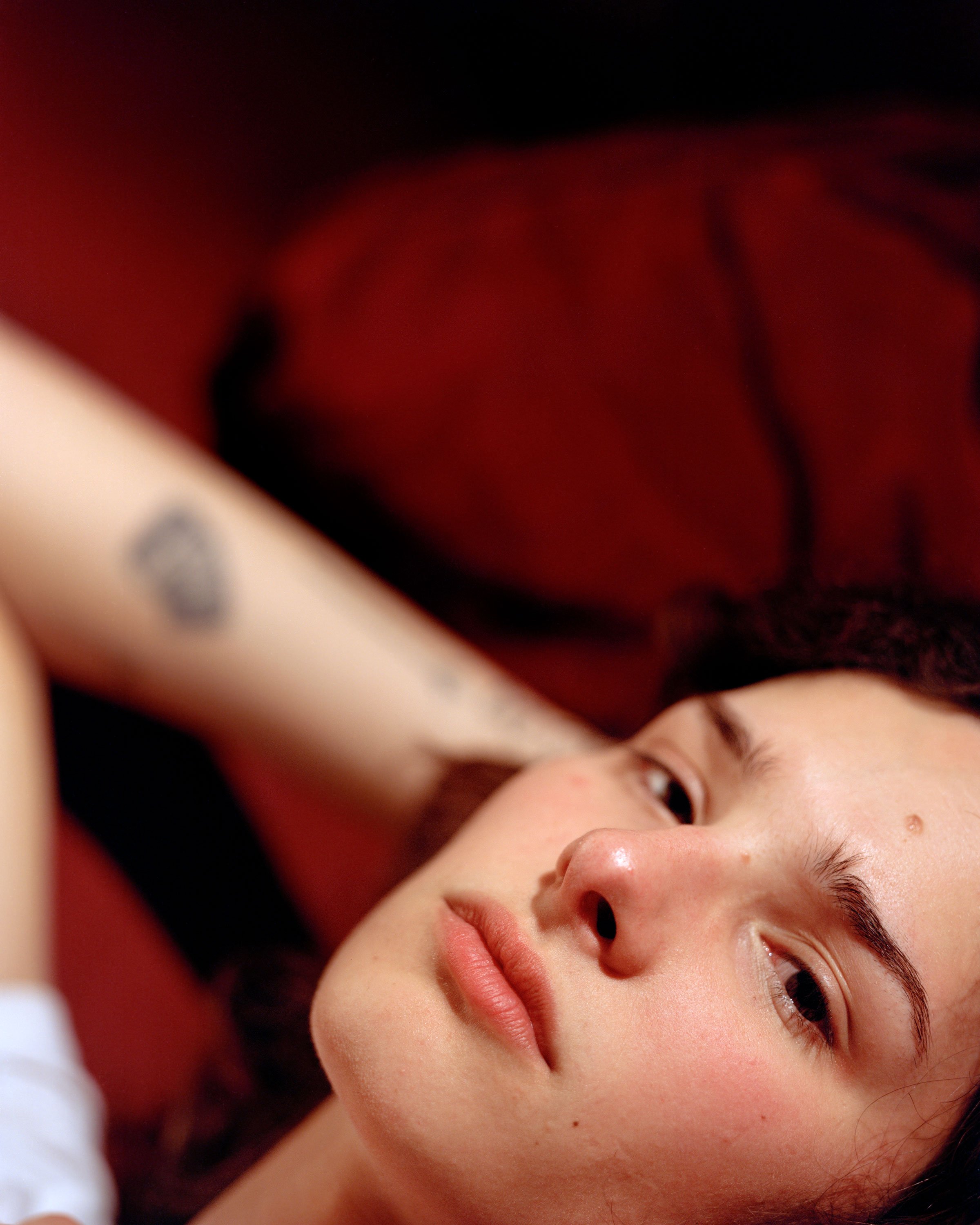
Andie Darling
An Interview with Elsa Hammarén
We spoke with Elsa Hammarén about her project Andie Darling.
Elsa Hammarén is a photographer working with analog processes in color and black and white. She explores themes of “the muse,” self, sexuality, and relationships. Her project Andie, Darling has been exhibited at Paris Photo, PhotoVogue Festival in Milan, and at the International Center of Photography, New York.
Her muse, Nussy Andrews (Andie), is a musician and multidisciplinary artist based in New York. She has released three albums, with a fourth on the way. Her second studio album, titled High Self Esteem, will be released soon.
Hammarén has been photographing Andie for over two years. After one year of photographing, the project met an audience in an intimate and immersive exhibition at Paris Photo 2024. As a visitor, I felt surprised walking in; it was different from everything else we saw at Paris Photo. Any art fair, no matter the quality, can naturally feel a bit like a mall, packed with photographs for sale, and it is hard for things to really stand out.
“I feel like I am inside the photograph.”
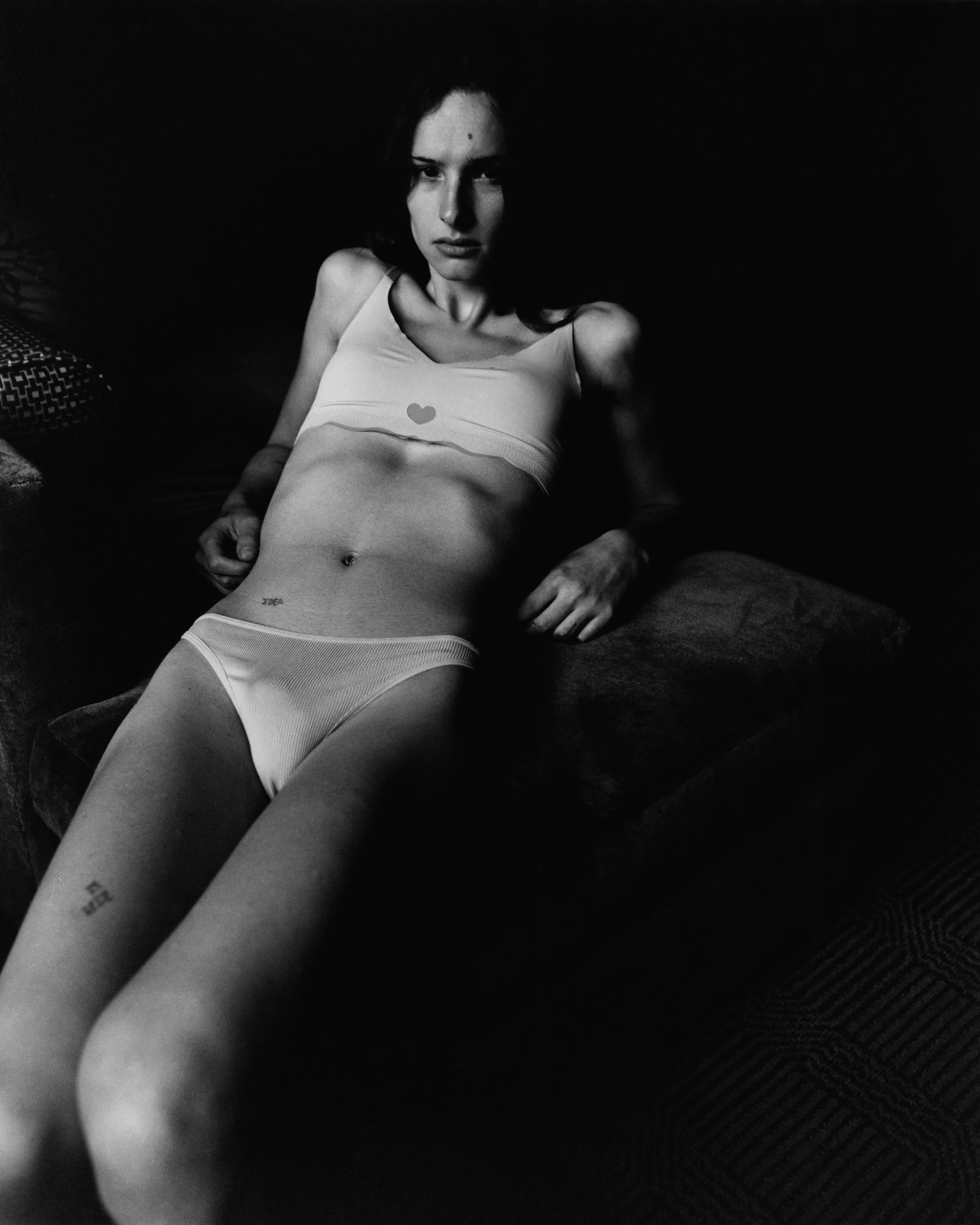
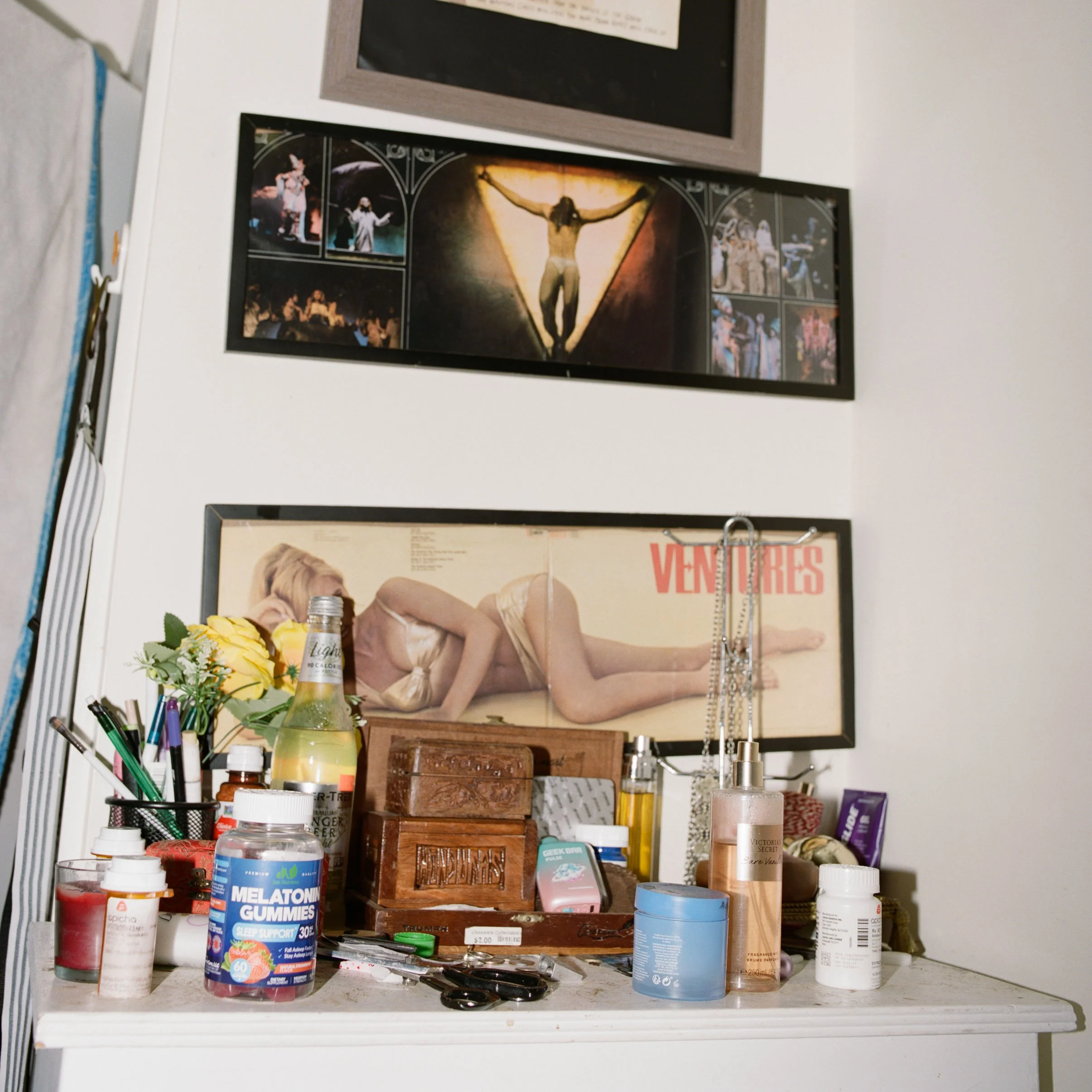
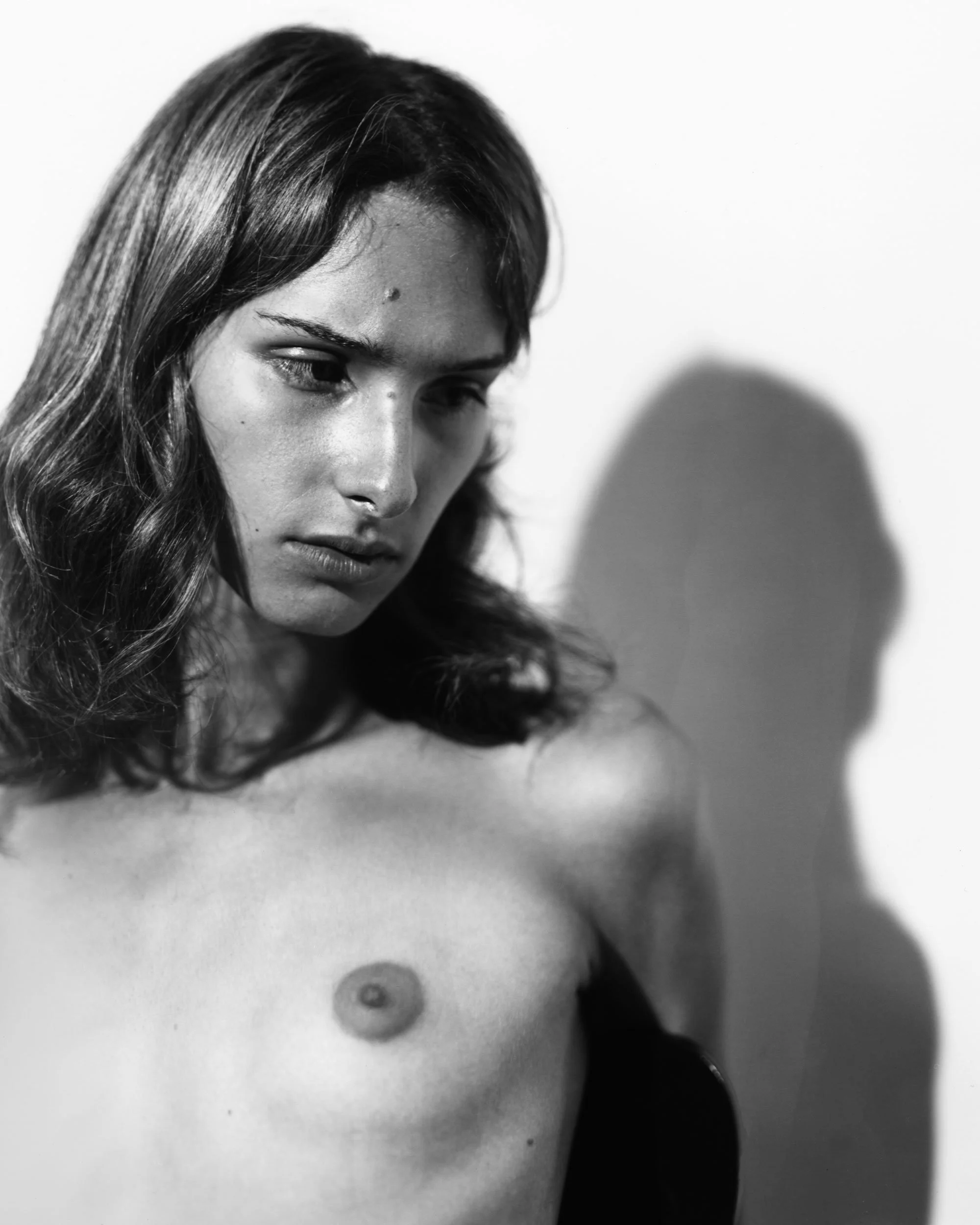
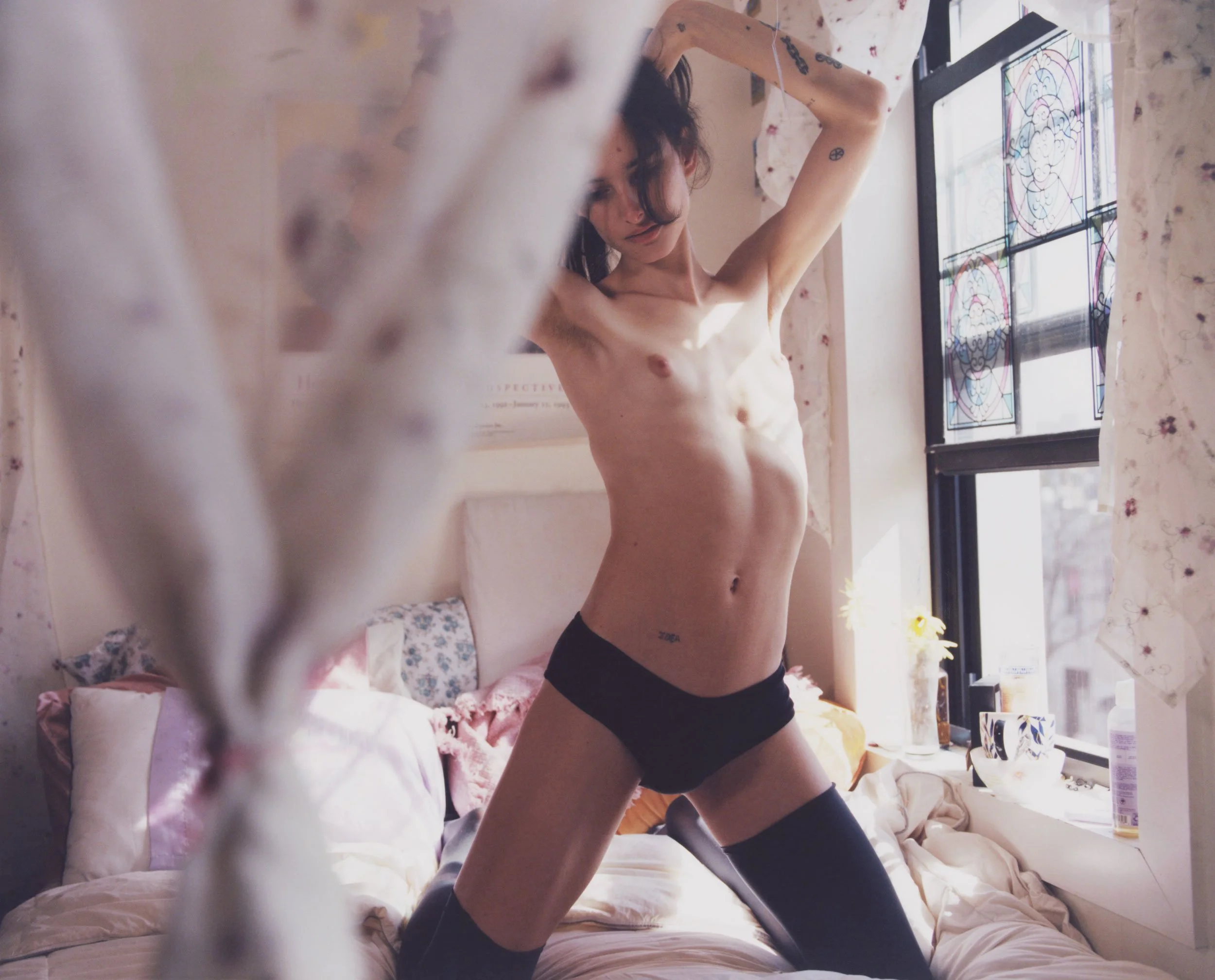
But to, at Paris Photo, be invited into a domestic space to view Andie, Darling struck me differently. I remember one visitor uttering at the exhibition, “I feel like I am inside the photograph.” He wasn’t wrong. Hammarén had brought in ephemera and furniture that invited us into her and Andie’s world; we could recognize the lamp from the simple, direct but astonishingly beautiful still life, and the curtain from the strong, assertive, and sensual portrait of Andie on her bed, later gaining recognition by Vogue’s Award Women by Women.
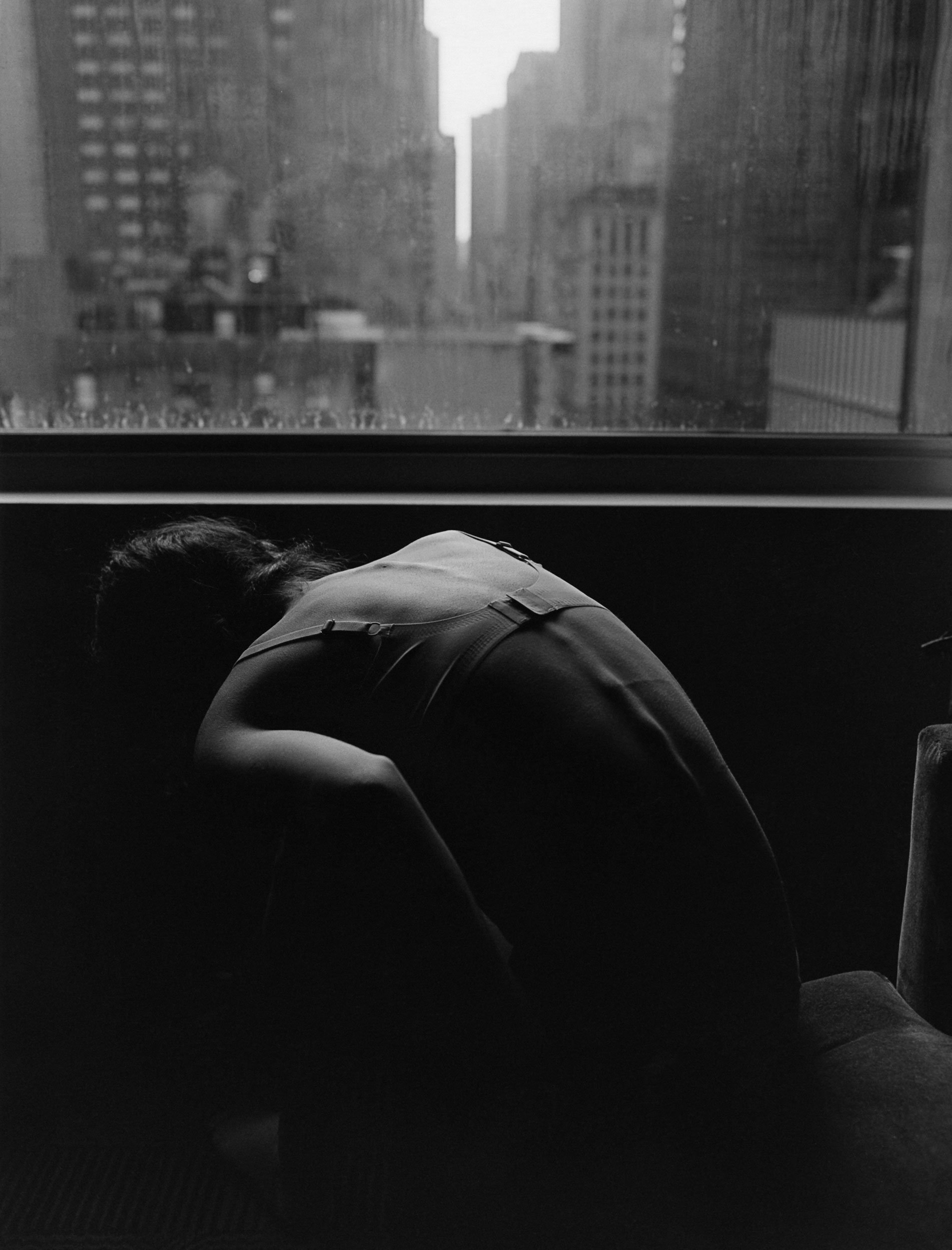
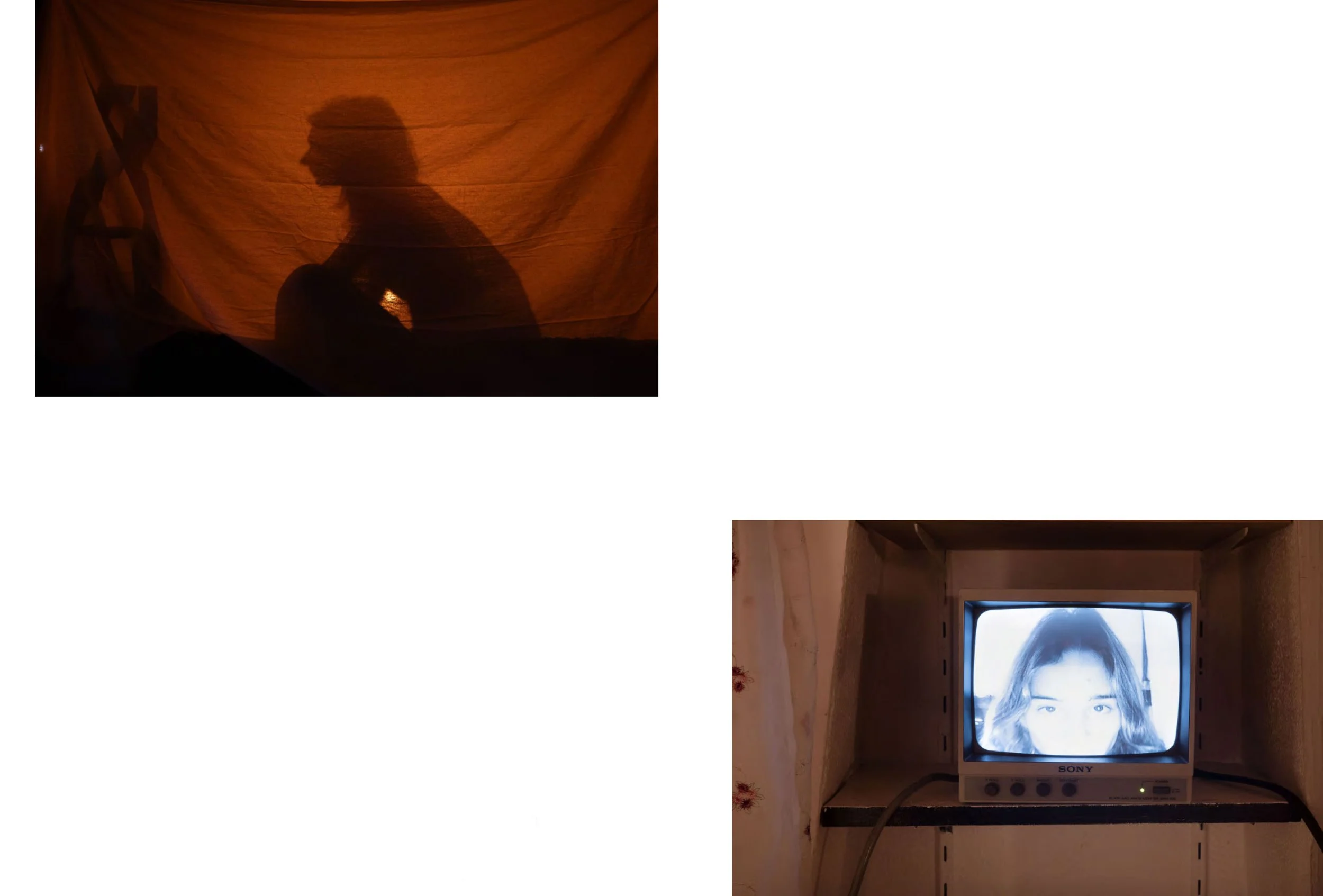
At the exhibition, I was asking a question about the subject, Andie, when I was surprised to have Andie herself answer. Where was she? Cleverly, but not obviously, Andie was present, but hidden, up on a loft behind a backlit curtain, only visible in silhouette. However, she could interact with the audience through a video camera hooked up to a small CRT TV positioned on a shelf. It created a distortion around whether the subject was really there or not.
“It flirts with the idea that there is a disruption between perceiving and being perceived. Even if I work very close to Andie, it is still my view of her being displayed, not hers, but I think the installation of the TV invites Andie’s voice while still maintaining a certain distance.”
“It flirts with the idea that there is a disruption between perceiving and being perceived.”
That distance is interesting, and perhaps it shrinks over time. Since 2024, when the work was exhibited in Paris, it has evolved massively, and Hammarén keeps finding new aspects to explore. Today, it almost seems like Hammarén has a hard time distinguishing herself from her subject, a sort of schizoid connection. When I ask her about it, she mentions her mother and twin sister as two strong inspirations for the project.
“As an artist, you have to be open to constant learning and you have to pay attention to everything: your reactions, desires, and dreams. They are all sources of inspiration.
I’m now learning how the project reflects aspects of myself as well, a kind of self-mirroring that continues to emerge.”
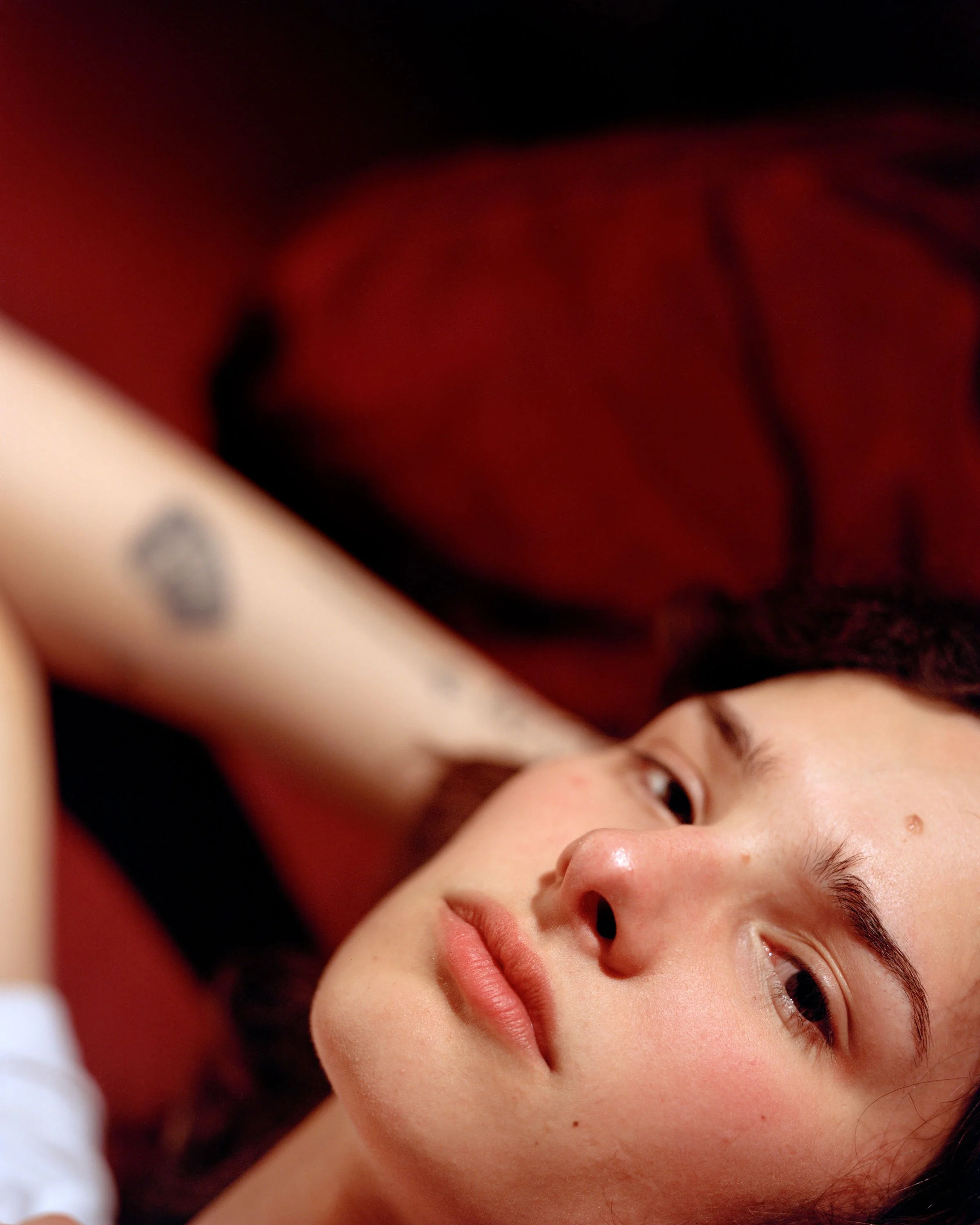
Hammarén tells me that her mother’s modeling catalogues from the 80s in Paris have been an unconscious inspiration, and when I see them, there are striking resemblances to Hammarén’s portraits of Andie. “Besides that, I have an identical twin sister, and feeling that sense of belonging is essential to me; it is everything I know.” The project with Andie seems to evolve into a combination of sisterhood, the act of seeing and being seen, as well as an almost eerie mirroring—an extended self-portrait.
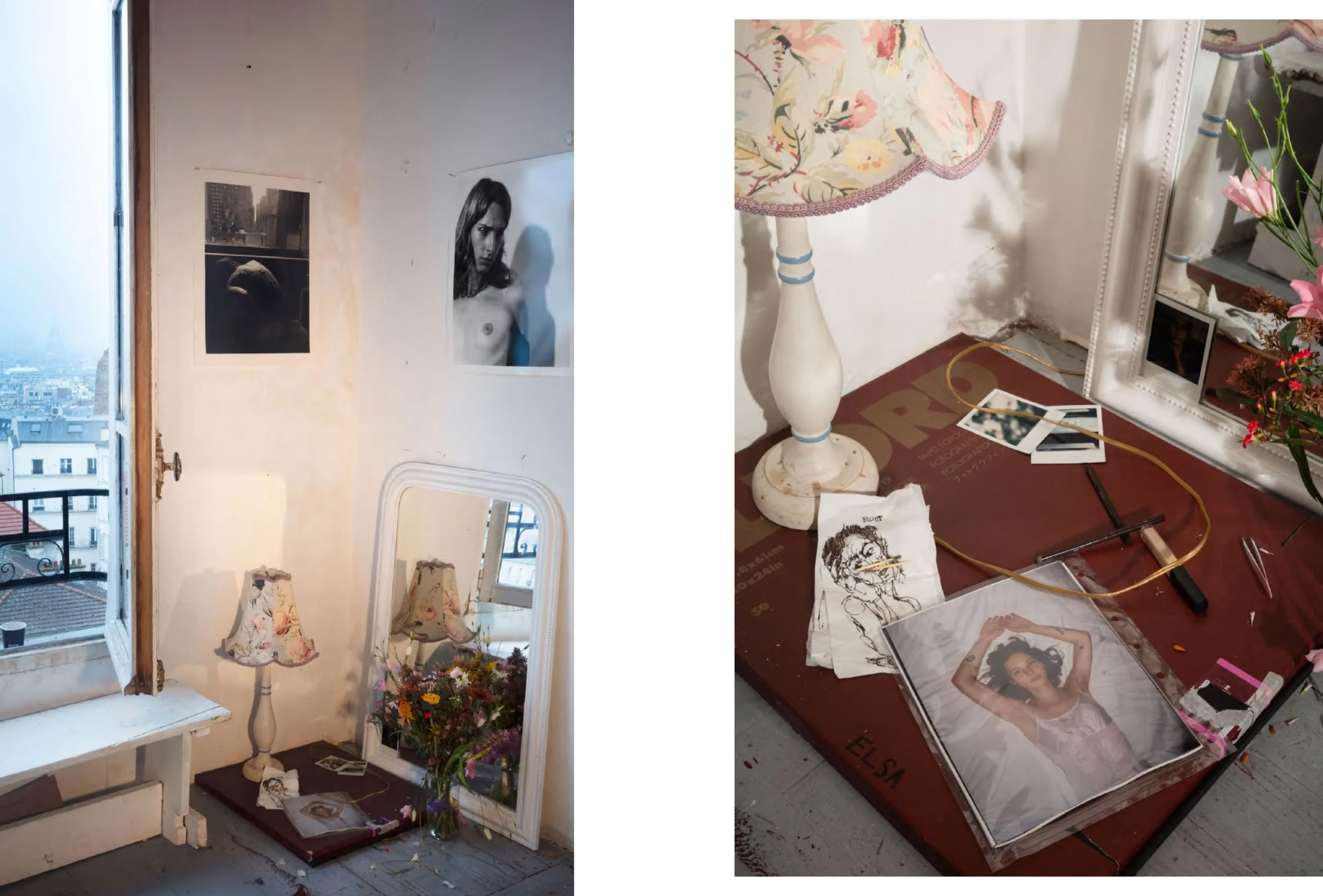
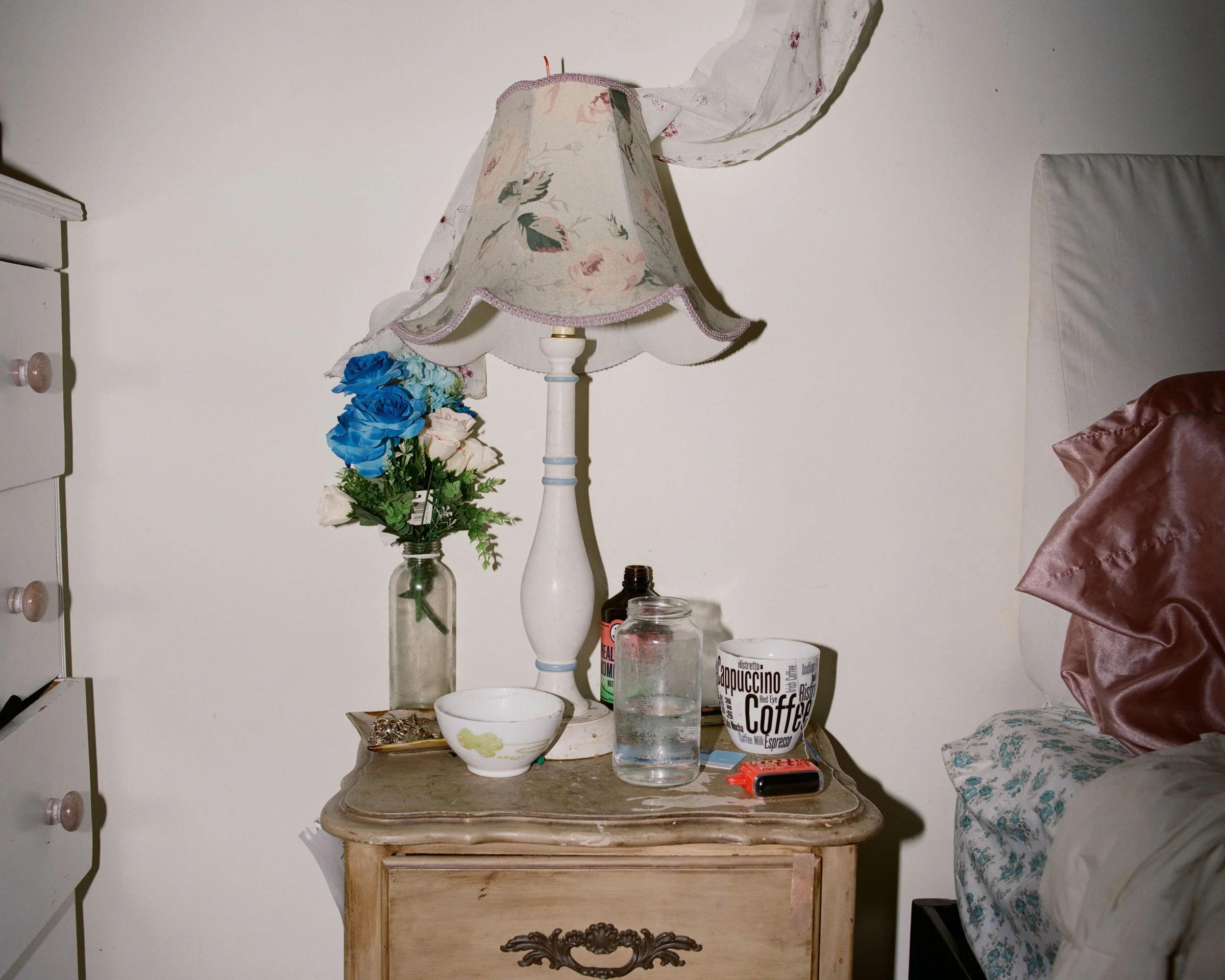
Hammarén blends these deeply personal experiences with a mature and unique visual language. She tells me she is a huge consumer of both literature and cinema. This appears in her work through visual references as well as more literal ideas.
Hammarén tells me about a recurrent red coat. Her mother was photographed in red as a 19-year-old model in Paris and later painted by her husband in a red coat years later. “I’ve been photographing Andie in a red coat, and without mentioning the connections, my mother reacted strongly, loving the image and telling me it reminded her of the movie Red by Kieslowski. Knowing her love for the film and identification with the actress, I suspected a feeling of identification also with Andie. It’s funny and kind of weird how we all have a sort of resemblance. I mean, the family part might be more obvious, but also that Andie fits in there and that I am so obsessed with photographing her.”
“It’s funny and kind of weird how we all have a sort of resemblance. I mean, the family part might be more obvious, but also that Andie fits in there and that I am so obsessed with photographing her.”
“Andie actually borrowed my red coat the first time we met,” Hammarén tells me, and I ask her to tell me the story:
“The first time I met Andie, we had a sleepover after photographing at a hotel in Midtown together with Jomé, the friend who introduced us. Andie slept in the room next door for the reason of being an early riser and scared of disturbing us. Around 5am, she was already up, stepping out into the busiest part of New York, which was almost silent. She came back with coffee for both me and Jomé. She had borrowed my coat without my permission, a comfort I both welcome and admire. The coat is this red coat I saw hanging outside a vintage store in Paris briefly before my move there. On the tag, it says ‘New York City Girl,’ which I immediately saw as a sign to move here.
Andie left the hotel lobby in the red coat and overheard a conversation from the staff: ‘That is a beautiful lady for 5 in the morning.’ Her second encounter was at Starbucks, where she had to ask the barista to break her hundred-dollar bill; the barista wasn’t pleased until Andie charmed her as well.
She handed me my flat white, telling these stories of her early morning in a quiet, otherwise so loud city. I remember being in awe of her.”
Artist BIO
Elsa Hammarén (b. 1999, Gothenburg, Sweden) is a photographer working with analog processes in both color and black and white. Her work explores themes of the muse, identity, sexuality, and relationships, often grounded in an intimate and personal perspective.
She began her career working closely with photographer and filmmaker JH Engström. Hammarén graduated from the one-year program at Atelier Smedsby in 2020 and later completed her studies at the International Center of Photography in 2024, where she was awarded the Director’s Fellowship. In 2025, she was an artist-in-residence at Arts Letters & Numbers.
Her project Andie Darling was shortlisted among the top 45 in Women by Women by PhotoVogue. Hammarén has exhibited internationally, including in Copenhagen, Paris, New York, Milan, and Stockholm, and her work has been published in magazines including Vogue, Dazed, Purple, and Office Magazine